

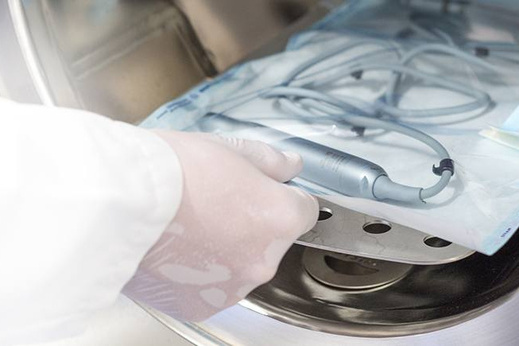

Type testing under realistic test conditions
A type test is more than a formal standard check. The crucial factor is whether a processing device delivers the required performance under defined, reproducible, and practical conditions.
HygCen Germany therefore examines not only individual technical parameters, but also the interplay of design, process control, loading, cleaning and disinfection performance, and documentation. Particular attention is paid to critical process conditions, such as difficult loading situations, complex geometries, hollow bodies, luminous material, or heat-sensitive medical devices.
This creates reliable evidence that the device meets the minimum normative requirements and provides a secure basis for subsequent validations in real-world operation.
What does the exam mean in practice?
Type testing assesses whether a device meets the minimum design and functional requirements of its standards. This includes, for example:
Cleaning and disinfection equipment (ISO 15883-1/-2)
- Temperature, time, and process parameters
- Efficacy of thermal/chemical disinfection
- Design safety (water flow, backflow protection, dead spaces)
- Self-disinfection of the device
- Documentation and control systems
Endoscope drying cabinets (EN 16442)
- Drying quality
- Airflow
- Filter performance
- Device hygiene
Sealing devices (ISO 11607-2)
- Reproducible sealing parameters
- Safety features
- Temperature control
- Sealing integrity
Small sterilizers (EN 13060)
- Pressure and temperature control
- Program sequences
- Steam generation and venting
- Safety mechanisms
Large sterilizers (EN285)
- Vapor quality
- Chamber pressure and temperature profiles
- Leakage rate testing
- Load capacity
H₂O₂/Plasma sterilizers (ISO 14937 / ISO 22441)
- Chemical sterilization parameters
- Concentration and distribution of the active ingredient
- Process control
- Safety functions
Formaldehyde sterilizers (EN 14180)
- Process limits
- Formaldehyde concentration
- Aeration
Type testing is performed under laboratory conditions in accordance with standards – strictly neutral and without any modifications to the device or process design.
Test design, worst case and surrogates
A key part of type testing is selecting a suitable test design. Depending on the device type and application, test conditions must be chosen to realistically simulate even critical usage situations.
These include, among others:
- suitable test soils and surrogates,
- defined worst-case conditions,
- representative loads,
- critical hollow body and lumen geometries,
- Evidence of cleaning, disinfection, drying or sterilization performance.
Especially with cleaning and disinfection devices for thermolabile endoscopes, the selection of suitable test models is crucial. HygCen Germany supports manufacturers in implementing standard-compliant and reproducible test conditions, including the evaluation of complex endoscope geometries and suitable surrogates according to the requirements of ISO 15883-4 Annex H.
Standard criteria – at a glance
| Standard criterion | Standard | HygCen test |
|---|---|---|
| Cleaning and disinfection equipment | ISO 15883-1/-2 | constructive & functional type testing |
| Endoscope drying cabinets | EN 16442 | Drying quality, airflow, hygiene |
| Sealing devices | ISO 11607-2 | Equipment & Process Requirements |
| Small sterilizers | EN 13060 | Functional and safety testing |
| Large sterilizers | EN 285 | Temperature/pressure profiles, steam quality |
| H₂O₂/plasma sterilizers | ISO 14937 / ISO 22441 | Parameter testing, safety devices |
| Formaldehyde sterilizers | EN 14180 | Process parameters & safety functions |
Here's how we conduct the type test of your device – step by step.
- Device Classification & Standards Scope:
We record device type, application area, relevant EN standards, and safety-critical functions.
No consulting services are provided; standards classification and testability are assessed. - Test planning according to device standard
- defined measuring points
- safety-relevant functional tests
- Temperature/pressure/time profiles
- Functional processes & documentation
- Repetitions & Standard Tolerances
- Laboratory testing according to standards
We test, among other things:
- minimum constructive and technical requirements
- Safety mechanisms
- Control and documentation functions
- defined test programs
- reproducible performance parameters
Assessment of conformity to standards
We assess:
- whether the minimum technical requirements are met
- whether safety-relevant functions are working properly
- whether the design requirements are met
- whether measured values are within the standard tolerances
No optimization, no device configuration.
- QES-signed test report
Contains:
- complete test documentation
- Measurement results & evaluation
- Compliance with standards (met/not met)
- unambiguous assignment to device categories
Why HygCen?
- DAkkS-accredited testing laboratory with many years of experience in equipment testing
- neutral, independent, no manufacturer interests
- Testing solely according to standards – without consulting services
- Combination with process validation possible (cleaning, disinfection, sterilization)
- QES-signed test reports for placing on the market and conformity assessment
- Experience with washer-disinfectors, sterilizers, sealing devices and endoscope reprocessing
- Expertise in worst-case testing, surrogates, and complex geometries
Type testing assesses whether a device meets the minimum technical requirements of its standard – regardless of where it is used. Process validation, on the other hand, verifies whether a specific reprocessing process (e.g., a washer-disinfector program or sterilization cycle) is effective under real-world conditions. A device may pass type testing, but a process may still be unvalidable – and vice versa. HygCen performs both procedures, but neutrally and without considering process or device configuration.
Type testing is required if:
- a device is to be placed on the market ,
- a manufacturer must demonstrate conformity to an EN standard ,
- Licensing authorities or notified bodies may require this.
- significant changes were made to the hardware/software,
New device models are being developed.
Depending on the device, tests range from temperature/pressure profiles and functional reliability to the reproducibility of sealing parameters.
Typical tests include:
- Control and documentation functions
- safety-relevant components
- Steam penetration (in the case of a steam star)
- Drying capacity (for drying cabinets)
- Seal integrity (in sealing devices)
- design features (backflow protection, dead spaces, filters)
If individual measurements fall outside the normative tolerances, HygCen Germany documents this neutrally and completely. The manufacturer is responsible for any design adjustments – HygCen Germany does not suggest changes or provide advice on device optimization.
Not mandatory – but advisable.
A device that fails type testing can sometimes still be process-validated – however:
A device that is not built according to standards at all almost always leads to problems in process validation in the long run.
HygCen Germany clearly separates the procedures but recognizes interfaces.
Ethylene oxide sterilization requires specialized facilities and safety infrastructure (gas handling, emission control) that HygCen Germany does not operate. Therefore, EO devices and ISO 11135 are not offered for type testing or process validation.
Further links
Reprocessing of medical devices,ISO 17664 - Validation of manufacturer's specifications, ISO 15883 - Waste Disposal Device Validation, ISO 17665-1 / EN 13060 / EN 285 - Sterilization Validation, Cleanliness Verification - TOC / Protein / Hemoglobin / ISO 19227, End of Life - Material and Functional Durability, Bioburden & Sterility - ISO 11737-1/-2, Type Testing of Reprocessing Equipment, Packaging & sterile barrier – ISO11607-2