

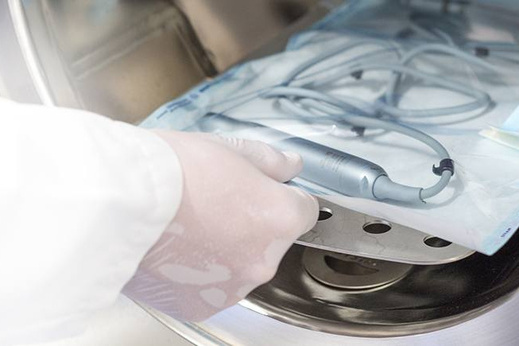

What does packaging validation mean in practice?
Packaging must be suitable for use throughout the entire life cycle of the product:
- sterility-preserving
- mechanically stable
- thermally, chemically and moisture resistant
- suitable for handling
- reproducibly sealable
be.
The validation typically includes:
1. Seal process validation (ISO 11607-2)
- Proof of reproducible sealing parameters (temperature, pressure, time)
- Checking the seal seam quality
- Documentation of critical process variables
- Evaluation of process variations (worst-case parameters)
2. Barrier and material testing (EN 868-6)
- Strength & integrity of the material
- Resistance to sterilization methods (steam, EO, plasma, gamma)
- Compatibility with the packaging process
3. Leakage and integrity tests (ASTM methods)
- ASTM F1929 : Dye Penetration Test
- ASTM F3039 : Pressure Differential Test / Seal Integrity
- ASTM F2096 : Bubble Leak Test
- ASTM F1608 : Microbiological Barrier Test
4. Aging & Shelf Life Tests
- Accelerated aging according to ASTM F1980
- actual storage times
- Influence of transport, mechanical stress & climate pollution
- Proof of stability over the entire declared shelf life
5. Interface evaluation
Packaging must fit sterilization, washer-disinfector processes, end-of-life testing and cleanliness requirements – without packaging design or process consulting from HygCen Germany.
Standard criteria – at a glance
| Standard criterion | Requirements / Content | HygCen test |
|---|---|---|
| Sealing process | ISO 11607-2 | Validation & Reproducibility |
| Material requirements | EN 868-6 | Testing material properties |
| Microbial barrier | ASTM F1608 | quantitative barrier assessment |
| Seal integrity | ASTM F1929 / F3039 | Visual and pressure tests |
| Tightness | ASTM F2096 | Bubble Leak Test |
| Shelf Life | ASTM F1980 | accelerated aging |
| Sterilization compatibility | ISO 17665-1 / ISO 11135 / ISO 22441 | Examination according to relevant procedures |
| Documentation | QES signierte Berichte | audit & MDR compliant |
This is how we inspect your packaging – step by step
- Analysis of the packaging system
We clarify:
- Packaging materials (films, Tyvek®, paper, containers)
- Sealing processes & process parameters
- Sterilization process
- planned shelf life
- relevant standards
- Test planning & selection of test modules
We define:
- mechanical & microbiological tests
- Leakage and seal seam analyses
- Aging programs
- Worst-case loads
- Methods according to ISO 11607-2, EN 868-6, ASTM series
Conducting laboratory tests:
We test, among other things:
- Seal integrity
- Barrier performance
- Tightness
- Material strength
- Sterilization resistance
- Aging effects (ASTM F1980)
- Packaging influences on the sterile barrier
All tests are neutral and DAkkS-accredited.
Validability Assessment:
We assess:
- Reproducibility of the packaging process
- Integrity & Barrier across Shelf Life
- Compatibility with sterilization
- Suitability in the reprocessing process
No process design, no material recommendations.
- QES-signed audit report.
The report contains:
- complete test design
- all measurement results
- Standard references
- Statement “Valiable / not validatable”
- Audit-compliant documentation
Why HygCen?
- DAkkS-accredited testing laboratory
- Expertise in ISO 11607‑2, EN 868‑6 & ASTM methods
- neutral , without packaging or process consulting
- QES-signed test results for MDR & audits
- seamless integration into sterilization , washer-disinfector validation, cleanliness and end-of-life testing
- Experience with complex packaging systems & special requirements
ISO 11607-2 specifies how packaging processes must be developed, validated, and monitored to reliably maintain the sterility barrier throughout the product's entire life cycle. The standard requires that sealing processes be reproducible, controllable, and documentable. These requirements are a key component of the MDR technical documentation and an essential basis for audits, as errors in the packaging process can directly compromise sterility.
ASTM methods complement European standards with clearly defined, internationally recognized testing procedures.
- ASTM F1929 & F3039 assess seal integrity,
- ASTM F2096 tests for leak tightness by changing pressure,
- ASTM F1608 determines microbiological barrier performance.
These methods produce highly robust evidence for international markets and are particularly helpful for manufacturers with global distribution channels.
When a product is shipped with a minimum shelf life (e.g., 2 or 5 years), the packaging must demonstrate that it can withstand this duration. Accelerated aging according to ASTM F1980 simulates these timeframes by exposing products to defined temperature and humidity conditions. Barrier performance, integrity, and material properties are then tested. HygCen Germany conducts the aging tests neutrally; the shelf life is determined by manufacturers and regulatory advisors.
Packaging and sterilization are inextricably linked. A sterile barrier only functions if it tolerates the sterilization process (e.g., steam, EO, plasma) and retains its integrity afterward. HygCen Germany tests whether packaging systems withstand the selected sterilization methods under real-world conditions. An assessment of whether a particular packaging concept is strategically optimal is not conducted by HygCen Germany, but by external consultants.
Re-validations are necessary when significant influencing factors change, such as:
- new sealing process
- changed seal parameters
- new packaging materials
- Change in the sterilization process
- new loading scenarios
- anomalies in monitoring
HygCen Germany merely documents whether the current process is validatable – without recommendations for packaging design or process optimization.
Further links
ISO 17664 - Validation of manufacturer's specifications, ISO 15883 - Waste Disposal Device Validation, ISO 17665-1 / EN 13060 / EN 285 - Sterilization Validation, Cleanliness Verification - TOC / Protein / Hemoglobin / ISO 19227, End of Life - Material and Functional Durability, Bioburden & Sterility - ISO 11737-1/-2, Type Testing of Reprocessing Equipment, Reprocessing of medical devices